Colour-Coded Cleaning: A Workplace Hygiene Guide
By Laura Matthew
What is colour-coded cleaning?
Colour-coded cleaning assigns equipment to particular areas or tasks so it is easier to prevent cross-contamination. Follow the colour chart approved for your premises: colour meanings can differ between sites and sectors. Use clear labels as well as colours, train staff and keep equipment within its assigned use.
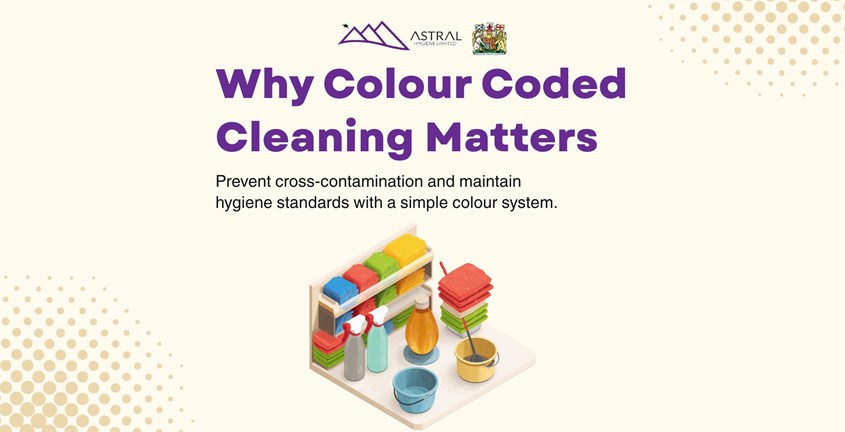
Keeping a workplace visibly clean is important — but maintaining proper hygiene is even more essential. While a quick vacuum or mop may make an area look spotless, harmful bacteria and germs can still remain. That’s why colour coded cleaning is such an effective system for workplaces. By assigning specific cleaning equipment to designated areas, businesses can significantly reduce the risk of cross contamination and help create a safer environment for staff and visitors. Recommended by the British Institute of Cleaning Science, colour coding helps ensure cleaning equipment is only used where it’s intended, preventing bacteria from spreading from one area to another. In this blog, we’ll explain how colour coded cleaning works, why it’s important, and how to implement it effectively in your workplace.
What Is Colour Coded Cleaning?
Colour coded cleaning is a hygiene system where different coloured cleaning equipment is assigned to specific areas of a building. This helps staff instantly identify which products should be used where, lowering the risk of contamination between high-risk and low-risk areas.
Typically, workplaces colour code items such as:
- Mops and mop buckets
- Cloths and sponges
- Dustpans and brushes
- Gloves and cleaning handles
The most commonly used colours are: Blue, Green, Red, Yellow. Each colour represents a particular area or cleaning task.
Example Workplace Colour Coding Guide
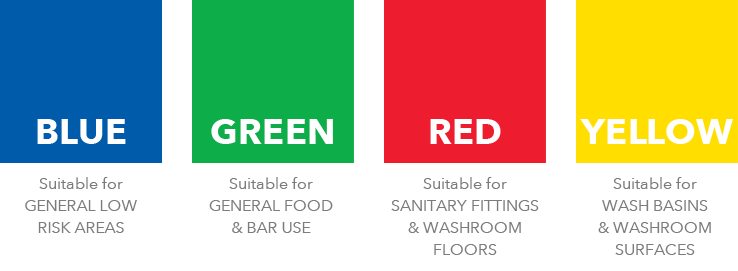
Blue – General Low-Risk Areas
In this example, blue equipment is assigned to general areas such as:
- Reception areas
- Offices
- Corridors
- Waiting rooms
- Lobbies
Green – Kitchens & Food Preparation Areas
In this example, green is assigned to food-related environments, including:
- Kitchens
- Food prep stations
- Bars and cafés
- Areas where food is stored or handled
Red – Toilets & Washrooms
In this example, red equipment is kept for sanitary areas such as:
- Toilets
- Urinals
- Shower areas
- Bathroom floors
Yellow – Washroom Sinks & Touchpoints
In this example, yellow is reserved for washroom sinks and touchpoints, including:
- Sinks
- Bathroom counters
- Mirrors
- Soap dispensers and touchpoints
This is an example scheme, not a universal colour standard. Check your site’s approved chart before using any equipment, particularly in healthcare or food production, where specific segregation requirements may apply.
Why Is Colour Coding So Important?
Using the same cleaning equipment across multiple areas can spread bacteria quickly and increase the risk of cross contamination. For example, using a cloth in both a washroom and a kitchen could transfer harmful germs to food preparation areas.
Implementing a colour coded cleaning system helps to:
- Reduce the spread of bacteria and viruses
- Improve workplace hygiene standards
- Minimise cross contamination risks
- Create a safer environment for staff and visitors
- Support compliance with workplace hygiene procedures
It also makes cleaning routines easier to manage, especially in busy environments such as restaurants, schools, healthcare settings, offices, and hospitality venues.
Watch Anna's Vlog!
Best Practices for Effective Colour Coded Cleaning
According to British Institute of Cleaning Science guidelines, there are several key steps businesses should follow to ensure colour coding is effective:
1. Train All Staff Properly
Every employee should receive clear training on the colour coding system as part of their induction and ongoing workplace training.
2. Keep the System Simple
Your cleaning system should be easy to understand and simple to follow. Clear labels and consistent colours help prevent mistakes.
3. Consider Colour Blindness
Some employees may struggle to distinguish certain colours. Including symbols, labels, or text alongside colours can improve accessibility and understanding.
4. Always Clean from Cleanest to Dirtiest
One of the golden rules of professional cleaning is to work from the cleanest area towards the dirtiest area. This significantly reduces the risk of contamination spreading during cleaning tasks.
Make Your Colour-Coding System Easy to Check
Keep a clear record of which equipment belongs in each area. A supervisor should be able to compare the written scheme with the tools and signage in use.
This can include:
- Colour coded mops and buckets
- Cloths and gloves
- Cleaning station signage
- Hygiene posters displayed in cleaning areas
Having a clear system in place demonstrates that your business understands and takes hygiene responsibilities seriously.
Is Colour Coded Cleaning a Legal Requirement?
BICSc describes its colour-coding scheme as guidance and notes that healthcare is an exception to the absence of compulsory industry standards. Check the requirements for your sector and the approved site policy; an example colour chart is not evidence of legal compliance. See BICSc’s colour-coding guidance.
Using a colour coded cleaning system is one of the most effective ways to support hygiene compliance and reduce workplace risks.
Colour Coded Cleaning Equipment from Astral Hygiene
At Astral Hygiene, we supply a wide range of colour coded cleaning equipment to help businesses maintain safe and hygienic environments.
Our range includes:
- Colour coded mops and buckets
- Cleaning cloths and sponges
- Brushes and dustpans
- Gloves and janitorial equipment
Whether you run a school, restaurant, office, healthcare facility, or hospitality venue, colour coded cleaning can help improve hygiene standards and reduce the risk of cross contamination.
Recommended Products

The 14L Colour-Coded Mop Bucket & Wringer is a practical choice for everyday floor cleaning in offices, schools, hospitality venues and other commercial premises. Its compact plastic design includes a removable wringer, helping cleaning teams control moisture when preparing a suitable mop for use. Choose red, blue, yellow or green to match the equipment colours assigned by your premises’ cleaning policy. Supplied individually, this mop bucket provides a straightforward addition to a janitorial cleaning kit. Pair it with an appropriately sized mop head and compatible handle, and follow the floor cleaner’s dilution instructions. Empty and rinse the bucket after each task, clean the wringer and allow both parts to dry before storage.
£7.15

The 137cm Colour-Coded Hygiene Handle is an aluminium handle for cleaning heads with a compatible T1 screw fitting. Use it to replace a worn handle or assemble mop, brush and squeegee equipment for everyday floor-cleaning tasks. Its coloured grip comes in white, red, green, blue and yellow, helping teams identify equipment assigned to different cleaning areas. Supplied as a handle only, it lets you choose a suitable head for the job and maintain your existing compatible tools. Check the head’s fitting before ordering, then secure it according to the assembly instructions. After cleaning, wipe away dirt and residues, dry the handle and return the tool to its designated storage area.
£7.00

All-Purpose Cleaning Cloths provide a convenient supply of lightweight wipes for everyday surface cleaning, spill collection and general wiping. Supplied in a pack of 50, these non-woven cloths are available in blue, green, red and yellow, making it easier to assign separate equipment to different cleaning areas. The 60 x 30cm wipes are made from a viscose and polyester blend with a perforated structure for absorbency and dirt collection. They are disposable cleaning wipes, useful in kitchens, bars, cafés, offices and housekeeping routines where fresh cloths are needed regularly. Match the cloth and any cleaning product to the surface, replace soiled wipes promptly and follow your site’s hygiene procedure.
£6.90

Practical questions
Does yellow always mean washroom sinks?
No. Colour assignments vary. The washroom example above should not replace an existing healthcare, food-production or other site-specific scheme. Follow the posted chart and ask the supervisor if a tool’s permitted use is unclear.
How can a team make colour coding accessible?
Add plain-text area labels or a numbering system to equipment and storage points. Explain the scheme during induction and check that staff can identify the right tools without relying on colour alone.
Answer summary and supporting sources checked 25 October 2026. BICSc colour-coding guidance; Vikan’s explanation of tool segregation.


Comments
Post a Comment