Safety Data Sheets: Understanding Cleaning Chemical Hazards
The Material Safety Data Sheets (MSDS)
The Safety Data Sheet has a lot of really important information in it. The first look generally means nothing to most people who are looking at it, but it does give professionals information that is required to decide how to treat the chemical and equally importantly how to treat an injury sustained by the chemical.
Safety data sheets provide information on chemical hazards, first aid and safe handling. In an emergency, seek medical help promptly and provide the product label and safety data sheet if available; do not delay treatment while looking for documents.
Where a bottle or information sheet carries a QR code, use it to find the relevant product documents. Check that the document matches the product and formulation. Keep current safety data sheets accessible to staff rather than relying on a phone connection during an incident.
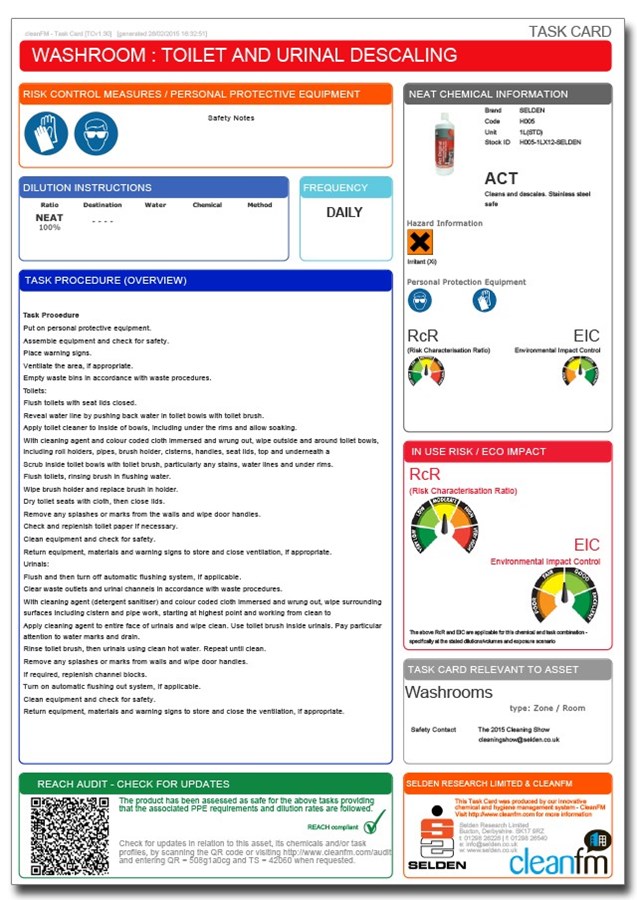
Safety data sheets describe chemical hazards and precautions. In Great Britain, the GB CLP system governs hazard classification and labelling, while UK REACH includes requirements for supplying safety information. Read the label wording as well as the pictograms.
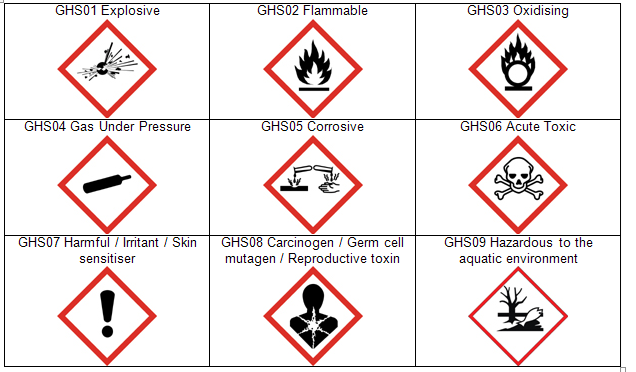
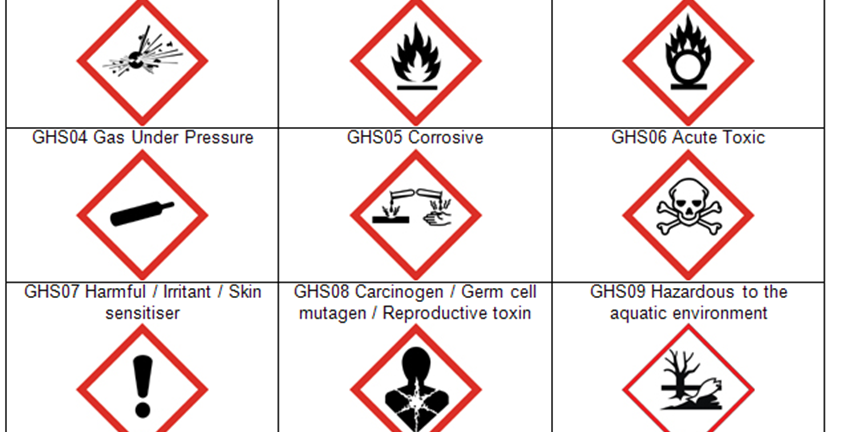
Current GB CLP pictograms use red-bordered diamonds. Older orange-and-black symbols are a reason to check the stock and documentation with the supplier; they do not by themselves establish a product’s expiry date.
There is no single two-year shelf life to apply to every cleaning chemical. Check the manufacturer’s storage conditions, batch information and stated shelf life. If the age, identity or condition is uncertain, set the product aside safely and ask the supplier for advice before using or disposing of it.
Follow the product’s disposal instructions and the site’s waste arrangements. Do not assume that unused concentrate can be poured into a sink or onto the ground; check section 13 of the safety data sheet.
An exclamation-mark pictogram does not mean an exposure is harmless or that medical attention will be unnecessary. Read the specific hazard and precautionary statements and section 4 for first-aid measures. Corrosive products can cause severe burns and eye damage; both acidic and alkaline cleaners can be corrosive. Use the task assessment and section 8 to select suitable protective equipment, rather than assuming any gloves and goggles will be adequate.
There is also guidance in terms of first aid, and moving and handling, and how to tackle a fire with these chemicals in them, but an important concern for us all is also what kinds of Personal Protection Equipment to Wear when using them – and when?
A concentrate and its working dilution may have different hazards. Do not assume dilution removes all risk: follow the product instructions and assess the actual task, including splashes, skin contact and how the solution is applied.
We do offer training here, for anyone who buys chemicals from us, this is a good way to make sure your team knows what they are dealing with, the best way to handle the chemical and also what exactly will happen to you if the chemicals are not handled correctly. During our training we generally show the participants exactly how to move, store, dispense and which PPE to wear and WHEN to wear it – this is all really important information for keeping EVERYONE safe. We keep it as short as possible, and we are very good at it.
In todays ecologically aware society, the final sections of the MSDS are so very important – what kind of damage is this chemical going to do to our planet? How should I use it to minimise the risk? This is very important information in terms of being responsible with chemicals.
So I do hope you now see that the MSDS’s are not useless pieces of information, that mean nothing to anyone, they hold critical information which permeates every aspect of your job/your business/your establishment…..
To get your Material Safety Data Sheets on the products you buy from us, just go to the website, search for a chemical and your safety data sheet is there available to download. Theres also a handy information sheet where we can get one, which we're also sharing!
If you’d like to know any more, or as a customer of Astral Hygiene Ltd you’d like to benefit from some free training, just give us a call ….. 01835 824 342.

How to use a safety data sheet before a cleaning task
A safety data sheet supports a COSHH assessment; it does not replace one. Match section 1 to the bottle, then turn the relevant information into a task-specific instruction.
- Before starting: check hazards in section 2, handling and storage in section 7, and exposure controls/PPE in section 8.
- If something goes wrong: locate first aid in section 4 and accidental-release measures in section 6.
- After use: check section 13 for disposal considerations.
Record the product name, SDS revision, task, working dilution, controls, responsible person and review trigger. Review the instruction when the product or method changes. Do not postpone emergency help while searching for a document.
Practical guidance and corrections checked 25 October 2026. Sources: HSE: safety data sheets; HSE: hazard pictograms; Evans Lift SDS (section structure and corrosive alkaline example); Blu Away information sheet (product-specific storage guidance). Original publication date and author attribution retained.


Comments
Post a Comment